
Implementing a rigorous plan for industrial tool maintenance contractors farmers 2026 extends equipment life by up to 40 percent through predictive analytics and consistent preventive care. This strategy focuses on maintaining clean storage environments, performing regular oil changes, and replacing worn components early to minimize downtime and maximize operational savings.
Every minute of downtime on a job site or in the field translates directly to lost revenue; however, many contractors and farmers still view tool maintenance as a secondary task rather than a core financial strategy. As we move into 2026, the increasing complexity of industrial equipment and the rising costs of replacement parts make a proactive approach essential for operational success. At Harrison Hunter Industrial Supply, we recognize that your tools are the primary drivers of your bottom line. This guide provides a practical roadmap for maximizing your return on investment through the 80/20 maintenance rule. You will learn specific techniques for managing cordless technology in the extreme Arizona heat, protecting abrasives from humidity, and implementing a rigorous safety gear checklist. By adopting this expert schedule, you can ensure your equipment remains reliable and your overhead remains predictable.
The Financial Case for Maintenance in 2026: ROI and the 80 20 Rule
The industrial landscape of 2026 demands a shift from reactive repairs to aggressive preventive strategies. At the core of this shift is the 80/20 rule of maintenance, which dictates that 80% of equipment failures result from just 20% of common, avoidable issues. For most operators, these issues include simple oversights like clogged cooling vents, depleted lubricants, or ignored cable fraying. By focusing on this critical 20%, industrial tool maintenance contractors farmers 2026 can fundamentally alter their profit margins.
Research indicates that a consistent preventive maintenance program can increase the service life of high-performance tools by up to 40% while slashing operational costs by nearly 30%. At Harrison Hunter Industrial Supply LLC, we facilitate these savings by providing essential equipment and professional-grade safety supplies through a model of distributor pricing without middlemen. When you secure premium tools at direct rates, rigorous maintenance becomes a force multiplier for your return on investment. Every extra year of service life extracted from a grinder or impact wrench is pure profit.
The financial risk of negligence is staggering. While a thorough weekly inspection takes perhaps 15 minutes of a technician’s time, the cost of unplanned downtime across modern industrial sectors now averages approximately $108,000 per hour. Losing a morning on a job site or in the field because of a seized motor is an avoidable catastrophe. Investing a few minutes in a checklist ensures that the tools you rely on remain assets rather than liabilities, keeping your operations running at peak efficiency without the premium price tag of emergency replacements.
Power Tool Longevity: Beyond Daily Cleaning
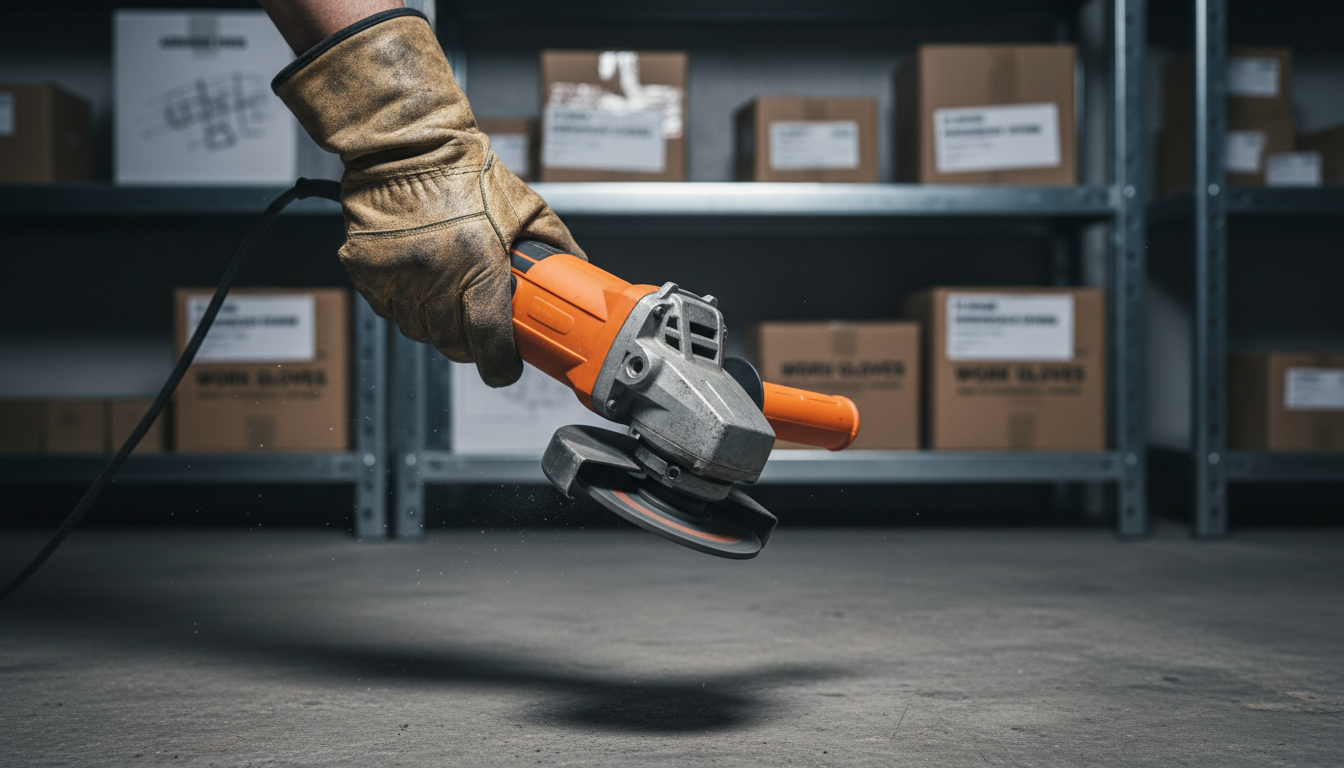
Moving from the broad financial strategy of the 80/20 rule into technical execution requires looking deep into the internals of your essential equipment. While wiped-down casings look professional, the real work for industrial tool maintenance contractors farmers 2026 happens inside the motor housing. High-efficiency motors, common in today’s cordless and corded lineups, feature tighter tolerances and denser windings that are exceptionally sensitive to heat and particulate buildup.
Using compressed air to blast out motor vents is no longer optional; it is a fundamental survival requirement for the tool. For angle grinders, which typically see a lifespan of 3 to 5 years, fine masonry or metal dust acts as an abrasive inside the cooling channels. Regular clearing of these paths prevents the insulation effect that leads to premature coil failure. Similarly, rotary hammers and impact wrenches require specific mechanical attention. While an impact wrench might naturally last 4 to 7 years, neglecting the anvil lubrication or the gear housing grease will see that number drop significantly. Applying high-quality synthetic lubricants to these moving parts can push even high-use tools toward the 7-year mark.
Tool Type | Expected Lifespan (Years) | Key Maintenance Focus |
|---|---|---|
Angle Grinders | 3 – 5 | Vent clearing, brush inspection |
Rotary Hammers | 3 – 6 | Hammer mechanism lubrication |
Impact Wrenches | 4 – 7 | Anvil and gear case greasing |
Circular Saws | 5 – 8 | Guard spring and base plate alignment |
Understanding duty cycles is equally critical. Every industrial tool has a designed threshold for continuous operation. Pushing a rotary hammer through thick concrete without pause, or exceeding the rated torque on an impact wrench, generates internal heat that degrades seals and electronics. When you source professional-grade safety supplies and tools through distributor pricing without middlemen, you are investing in top-tier engineering. Respecting these engineering limits ensures that your savings are not erased by the cost of avoidable motor burnouts.
Managing Cordless Technology: Battery Care in Extreme Arizona Heat
In the Scottsdale region, the greatest threat to your cordless essential equipment is not the workload, but the environmental temperature. Lithium-ion batteries are sensitive chemical reservoirs. While they provide the high discharge rates necessary for industrial tool maintenance contractors farmers 2026, they fail prematurely when exposed to the extreme ambient heat common across the Southwest.
Leaving batteries in a truck bed or a non-climate-controlled job box during an Arizona summer is a recipe for permanent capacity loss. Internal temperatures in these environments can easily exceed 160 degrees Fahrenheit, causing the electrolyte to degrade and internal resistance to climb. For professionals in the field, the best practice is to move batteries into a temperature-controlled office or trailer at the end of every shift. Never leave your primary power source in a metal shed where heat soak can destroy cells overnight.
For long-term storage, avoid keeping batteries at a 100% state of charge. Aim for a 40% to 60% range; this prevents the chemical stress that occurs when cells are held at maximum voltage for extended periods. Furthermore, pay close attention to where you place your charging stations. Charging is an exothermic process that generates its own heat. Placing a charger in direct sunlight or a stagnant corner of a hot shop can trigger thermal shutdowns or permanent cell damage. By sourcing your batteries through distributor pricing without middlemen and pairing them with professional-grade safety supplies, you can maintain a high-performance fleet even in the harshest desert conditions.
Abrasive Storage: Protecting Grinding Wheels and Flap Discs from Humidity
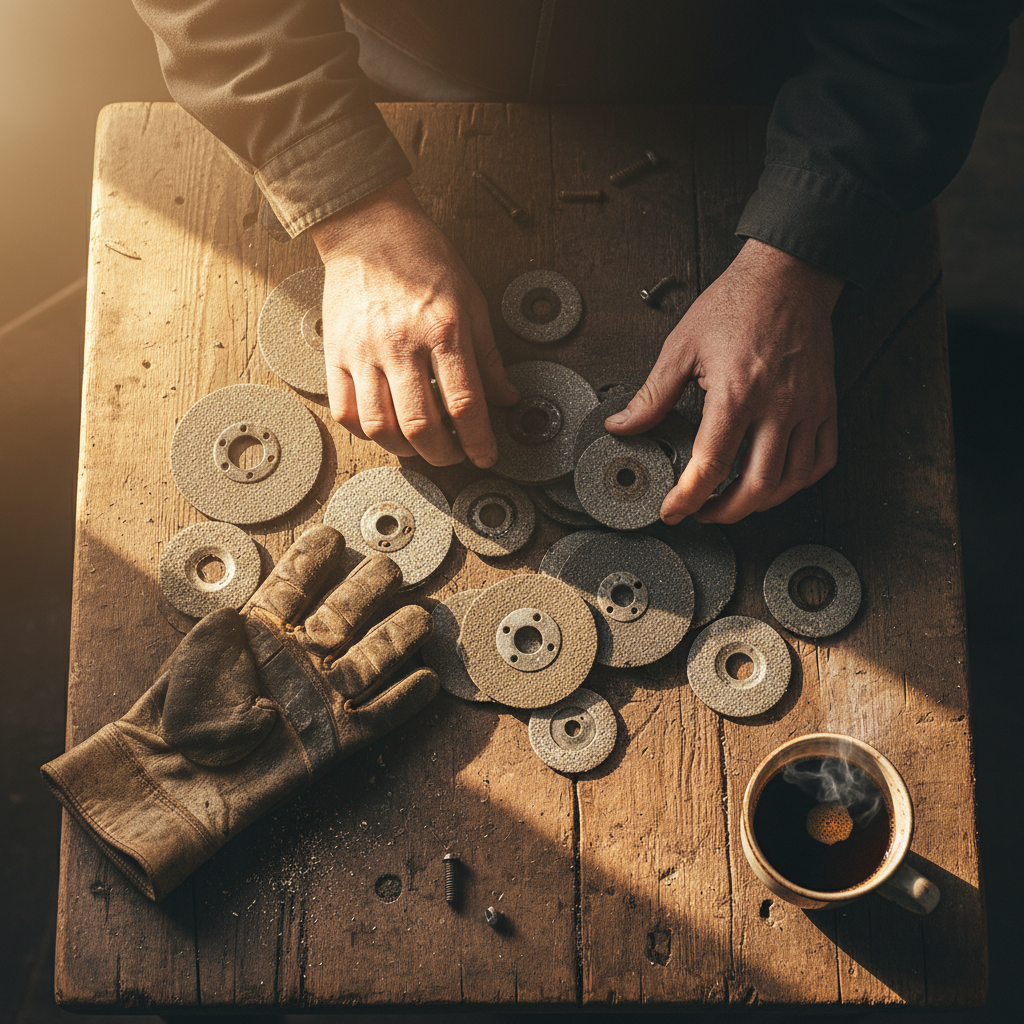
Environmental management is just as critical for your consumables as it is for your power sources. For industrial tool maintenance contractors farmers 2026, the storage of abrasives often goes overlooked, yet it directly impacts both operator safety and final finish quality. Resinoid bonded grinding wheels are essentially organic products that degrade over time. Industry data confirms that these wheels should be rotated and used within two years of their manufacture date to maintain their structural integrity.
The primary antagonist for these abrasives is moisture. High humidity levels cause resin bonds to soften, which weakens the essential connection between the abrasive grains and the fiberglass or paper backing. When a wheel absorbs excess moisture, it often suffers from "glazing." This occurs when the abrasive grains fail to fracture and shed, causing the wheel surface to smooth over and generate excessive heat that ruins workpieces. In extreme cases, moisture induced bond failure can lead to catastrophic wheel breakage during operation. To mitigate these risks, maintain "Goldilocks" storage conditions: a temperature range of 60 to 80 degrees Fahrenheit and a relative humidity between 40% and 60%.
Abrasive Category | Recommended Shelf Life | Ideal Humidity | Ideal Temperature |
|---|---|---|---|
Resinoid Bonded Wheels | 2 Years | 40% to 60% | 60°F to 80°F |
Coated Abrasives (Flap Discs) | 3 Years | 45% to 55% | 65°F to 75°F |
Vitrified Wheels | Indefinite (if kept dry) | Below 50% | 60°F to 80°F |
Sourcing your essential equipment through distributor pricing without middlemen facilitates tighter inventory control, ensuring that your shop does not harbor expired or degraded stock. Proper storage, combined with the use of professional-grade safety supplies, remains the most effective way to prevent abrasive related accidents on the job site or the farm.
Farm Equipment Maintenance: Heavy Duty Care for Agricultural Tools

The transition from hand-held tools to heavy agricultural machinery marks a significant shift in scale, but the principles of industrial tool maintenance contractors farmers 2026 remain identical. On the farm, neglected maintenance does not just stall a project; it can halt an entire season. Heavy duty care begins with a rigorous inspection of hitches and tires. In the intense Southwest climate, rubber compounds are highly susceptible to dry rot, which compromises structural integrity under heavy loads. Maintaining precise tire inflation is not merely about preventing flats; it ensures optimal traction and minimizes soil compaction, which directly impacts fuel efficiency and crop yield.
Internal mechanical health for tractor attachments requires strict adherence to service intervals. Regular oil changes in hydraulic systems and gearboxes prevent the accumulation of metal shavings and chemical breakdown. Lubricating every grease point on a disc harrow or baler ensures that moving parts remain fluid, reducing the friction that leads to seized bearings. To maximize the life of this essential equipment, maintain organized digital service records. Cloud based logs prove warranty compliance and significantly boost resale value when it comes time to upgrade your fleet.
Corrosion remains a persistent threat to metal surfaces exposed to the elements. Applying moisture displacing sprays or specialized wax based coatings to exposed steel prevents rust from taking hold during the off season or after exposure to fertilizers. By sourcing high performance lubricants and professional-grade safety supplies through distributor pricing without middlemen, agricultural operations can maintain a rigorous preventative schedule without the burden of inflated overhead. Protecting these heavy investments ensures that your machinery remains a reliable partner in the field through 2026 and beyond.
The PPE Expiration Checklist: When to Replace Safety Gear

Maintaining essential equipment extends beyond the mechanical; it includes the gear protecting the operator. For industrial tool maintenance contractors farmers 2026, the question of when to replace personal protective equipment (PPE) is a matter of both safety and regulatory compliance. Hard hats generally have a service life of two to five years from the date of manufacture, yet the internal suspension system, which absorbs the force of an impact, requires replacement every 12 months to ensure peak performance.
In the Scottsdale climate, intense UV radiation accelerates the degradation of plastics and synthetic fabrics. This environmental stress makes daily inspections mandatory. Check hard hat shells for "chalking," brittleness, or any loss of flexibility. For respirators and gloves, prioritize the inspection of seam integrity and material thinning. A respirator with a compromised seal or work gloves with thinned palms provide negligible protection against industrial hazards.
PPE Category | Replacement Interval | Critical Inspection Point |
|---|---|---|
Hard Hat Shell | 2 to 5 Years | Cracks, UV fading, and surface chalking |
Suspension System | 12 Months | Fraying straps and plastic connector fatigue |
Safety Glasses | 1 to 2 Years | Lens scratches and frame warping |
Leather/High-Dexterity Gloves | Upon thinning | Seam failure and palm wear patterns |
Respirator Facepieces | Per manufacturer | Valve flexibility and gasket seal integrity |
Sourcing professional-grade safety supplies through distributor pricing without middlemen ensures that your team utilizes fresh inventory rather than aged stock that has sat in a third-party warehouse. Adhering to these replacement cycles is the only way to guarantee that your protective layers are as reliable as the tools they accompany.
A 2026 Tool Maintenance Schedule for Busy Professionals
Implementing a rigorous schedule is the final step in operationalizing an industrial tool maintenance contractors farmers 2026 strategy. By standardizing these intervals, teams ensure that essential equipment performs reliably under peak loads. This systematic approach reduces the likelihood of catastrophic failure and maximizes the value of distributor pricing without middlemen. Following a structured timeline allows technicians and farm hands to catch minor wear before it escalates into a work stoppage.
Frequency | Action Items | Priority Focus |
|---|---|---|
Daily | Clear motor vents with compressed air; wipe tool housings; inspect power cords for fraying or exposed wires. | Thermal Management |
Weekly | Lubricate impact anvils and rotary chucks; check battery charge levels; inspect professional-grade safety supplies for UV damage. | Mechanical Fluidity |
Quarterly | Deep clean internal housings; calibrate torque and measuring tools; update digital service logs for warranty compliance. | Precision and Compliance |
Consistency in these tasks prevents the gradual degradation that leads to the 20% of issues causing 80% of failures. Adhering to this routine ensures that tools remain in peak condition, facilitating a 40% increase in equipment life and preventing the costly downtime that erodes profitability in the harsh Arizona climate.
Keeping your industrial tools in peak condition requires a consistent commitment to routine checks and proactive care. By implementing these modern strategies, contractors and farmers can ensure their equipment performs reliably for years to come. Managing a complex inventory often feels like a full-time job on its own. If you want expert help optimizing your tool longevity and supply chain, you can read more About our dedicated team. We are here to provide the support you need for a more efficient workplace.