The most effective welding grinding cutting PPE safety gear contractors farmers 2026 require consists of auto-darkening helmets, flame-resistant leather clothing, and advanced respiratory protection systems. This specialized equipment ensures compliance with safety standards while providing critical defense against sparks, heat, and flying metal debris during rigorous jobsite tasks.
In the demanding environments of modern metalworking, relying on outdated safety equipment is a liability that no contractor or farmer can afford. Whether you are grinding high-carbon steel or welding in the relentless Arizona heat, the physical toll of subpar gear often manifests as chronic eye fatigue, heat exhaustion, or preventable injuries. As we approach 2026, the intersection of technological advancement and stricter OSHA standards requires a more sophisticated approach to personal protective equipment. At Harrison Hunter Industrial Supply LLC, we understand that professional-grade protection must balance absolute safety with the practicalities of a long workday. This guide explores the essential evolution of welding helmet optics, the necessity of dual-layer facial protection during grinding, and the latest respiratory solutions. You will learn how to select gear that maintains rigorous compliance while providing the specific comfort necessary to survive the toughest shop and field conditions.
The Evolution of Metalworking Safety: Why 2026 Requires a New PPE Standard
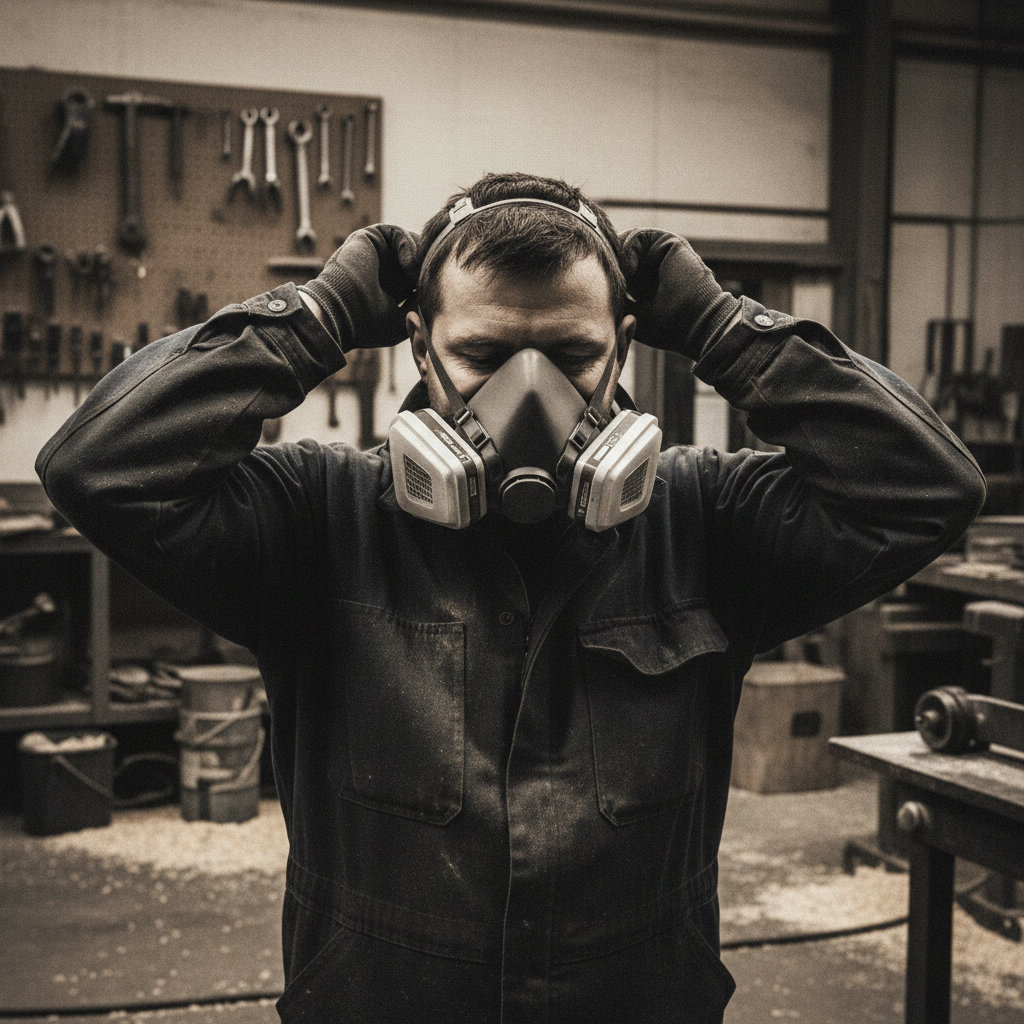
The landscape of industrial metalwork in 2026 has shifted toward higher intensity and more complex materials. On Arizona job sites and family farms, the equipment being repaired is more sophisticated, requiring more aggressive grinding and higher-heat welding than in decades past. While basic safety equipment has been available for years, the modern shop environment demands a proactive stance. New OSHA updates reflect these changes, yet many operations still rely on outdated protection.
Recent data indicates that welding and grinding activities account for more than 50% of all workplace eye injuries. This statistic is a wake-up call for anyone operating a grinder or a stinger. In the harsh conditions of Scottsdale and the surrounding desert, heat and airborne dust create a unique set of challenges for standard gear. Harrison Hunter Industrial Supply was founded to bridge the gap between basic retail options and professional-grade requirements.
Our mission is to provide high-performance industrial safety gear and professional industrial tools directly to those who need them. By removing middleman markups, we ensure that the welding grinding cutting PPE safety gear contractors farmers 2026 requires is accessible without compromising on quality or durability. If you have questions about specific site requirements, you can contact Harrison Hunter Industrial Supply for expert guidance on modernizing your safety locker.
Welding Helmet Technology: Selecting Lenses for Optical Clarity and Eye Health
The modern standard for eye protection has moved beyond simply blocking light. In 2026, the benchmark for high-performance helmets is the 1/1/1/1 optical clarity rating. This four-part EN 379 certification measures accuracy of vision, light diffusion, consistent shade across the entire lens, and clarity at various angles. For contractors working long shifts, these ratings significantly reduce eye strain and associated headaches. For farmers performing quick repairs on a tractor frame, high-definition clarity is just as vital. Photokeratitis, commonly known as arc eye, can occur in seconds; a farmer performing a five-minute weld is at the same risk for corneal burns as a full-time fabricator if their gear is subpar.
Lens technology has evolved from the traditional green tint of older auto-darkening lenses to modern True Color optics. This advancement allows a more natural color spectrum to pass through the lens, providing a crisp view of the weld puddle and the surrounding heat-affected zone. When selecting professional industrial tools, prioritizing these advanced lenses ensures better bead control and fewer restarts due to poor visibility.
A common point of discussion is the choice between auto-darkening and fixed shade lenses. While fixed shade helmets are durable, they require the operator to flip the helmet down manually right as they strike the arc. This repetitive motion often leads to neck fatigue or accidental flashes if the timing is off. Auto-darkening helmets provide a constant shield, remaining in a light state for setup and switching to the dark state in milliseconds. This increases productivity and safety for beginners and seasoned pros alike, ensuring that the welding grinding cutting PPE safety gear contractors farmers 2026 requires is always in place before the first spark flies.
The Dual Protection Rule: Why Face Shields Alone Fail During Grinding
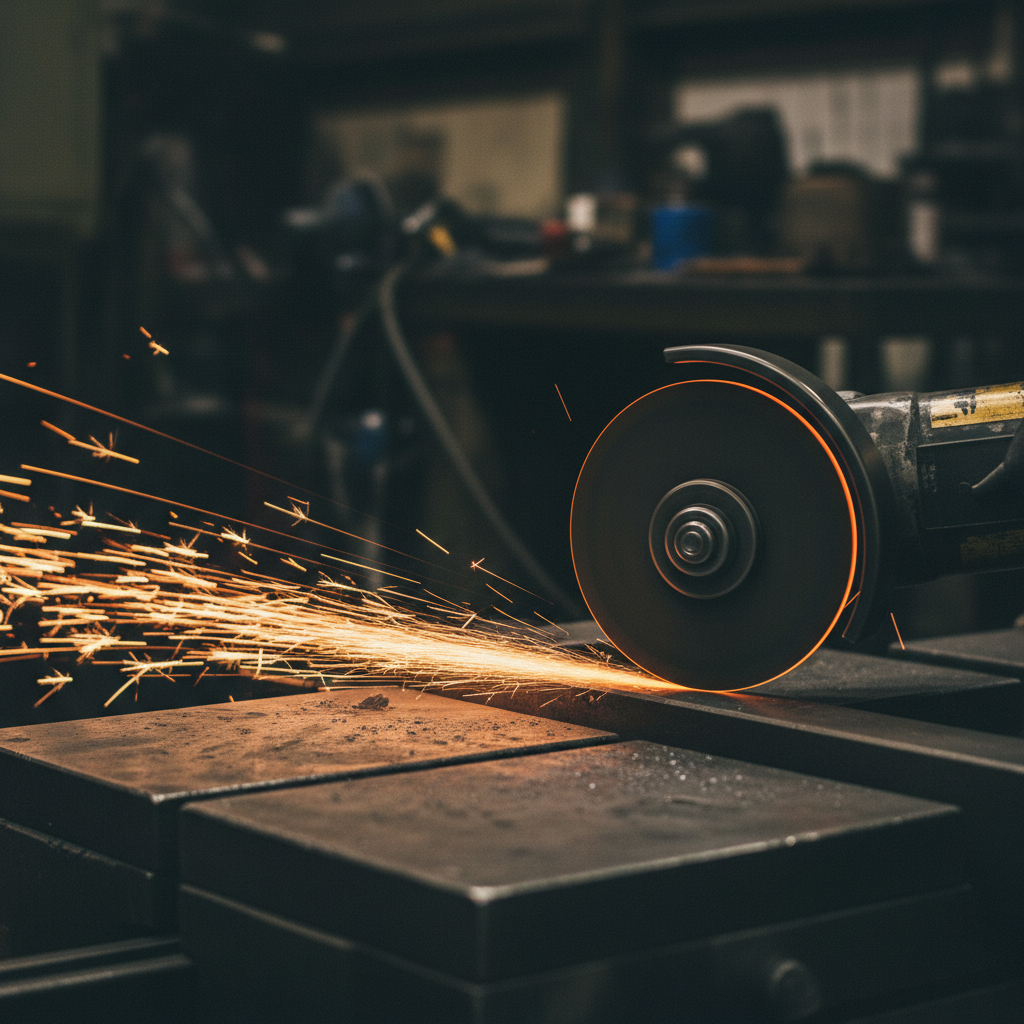
Grinding presents a different ballistic profile than welding, requiring a shift in how we approach the face and eyes. One of the most frequent questions from crews in the field is: Does OSHA require a face shield when grinding? The answer is a definitive yes, but with a critical caveat that many operations overlook. Under OSHA 1910.133 and the ANSI Z87.1 standard, a face shield is classified as a secondary protector. This means it is legally and practically insufficient to wear a face shield alone. You must wear Z87+ rated safety glasses or goggles underneath to be compliant.
The physics of a high speed angle grinder explains why this rule is non-negotiable. At speeds exceeding 10,000 RPM, sparks and metal fragments do not always travel in a predictable arc. They frequently ricochet off the operator's chest, the workpiece, or the shop wall, curling behind the perimeter of a face shield. Without a primary seal against the face, these high speed particles can cause permanent corneal scarring. When sourcing industrial safety gear for your shop or farm, ensure your kit meets the high impact (Z87+) rating rather than basic impact standards.
Grinding PPE Component | Requirement |
|---|---|
Primary Eye Protection | ANSI Z87+ rated safety glasses with wraparound side shields |
Secondary Protection | High-impact polycarbonate face shield |
Hearing Protection | Earmuffs or plugs with at least 25dB Noise Reduction Rating (NRR) |
Integrating this dual protection into the standard welding grinding cutting PPE safety gear contractors farmers 2026 workflow is essential for preventing the preventable injuries that halt production. If you have questions about the compatibility between specific shields and respirators or need professional industrial tools that withstand heavy use, you can contact Harrison Hunter Industrial Supply for technical assistance.
Protective Clothing That Survives the Arizona Heat: Leather vs. Flame Resistant Fabrics
Selecting the right body protection in the Scottsdale and Phoenix heat requires balancing thermal insulation against heat stroke risks. Traditional full-grain leather jackets provide the best defense against heavy slag and UV radiation; however, they are often unbearable during Arizona summers. Modern Flame Resistant (FR) cotton offers significant breathability and is treated to self-extinguish when sparks land on the fabric. For most regional applications, hybrid gear is the professional standard. These garments feature cowhide leather on the sleeves and shoulders where spatter is most aggressive, paired with a lightweight FR cotton torso to allow body heat to escape.
Farmers operating in open fields often face unpredictable wind that carries sparks toward the body from various angles. In these scenarios, full coverage is vital to prevent stray embers from reaching skin. Conversely, contractors working at a fixed station in a ventilated shop can often utilize a heavy-duty leather apron. Aprons protect the vital organs during bench work while allowing maximum airflow across the back. For out-of-position tasks or overhead welding, a full jacket remains mandatory to prevent hot metal from entering the collar or sleeves. Sourcing high-quality industrial safety gear from a direct distributor ensures you have the right weight of fabric for the specific job. Having the correct welding grinding cutting PPE safety gear contractors farmers 2026 demands means choosing durability that does not sacrifice the health of the operator in the desert sun. For more specific sizing and material specs, you can contact Harrison Hunter Industrial Supply to discuss your fleet’s needs.
Protection Type | Best Use Case | Benefit in Arizona Climate |
|---|---|---|
Full Leather | Heavy gouging, overhead welding | Maximum spark resistance |
FR Cotton | Light MIG/TIG, summer shop work | High breathability, lightweight |
Hybrid (Leather/FR) | General fabrication, mobile repair | Balance of protection and cooling |
Leather Apron | Stationary bench grinding/welding | Superior airflow for the operator |
Respiratory Protection 2026: Choosing Between PAPR and Half Mask Respirators
Protecting the respiratory system is arguably the most critical component of modern shop safety. While many operations still rely on N95 disposables, these masks are largely insufficient for the specific hazards found in 2026 metalworking. N95s are designed for nuisance dust, not the concentrated metal fumes generated by welding stainless steel or galvanized pipes. For contractors working with stainless, the risk of hexavalent chromium exposure makes selecting the right industrial safety gear a matter of long term health rather than just basic compliance.
When determining the best path for your crew, the choice often comes down to the duration of the task and the materials involved. A Powered Air Purifying Respirator (PAPR) is the gold standard for full-time fabricators. These systems use a battery-powered blower to force filtered air into the welding helmet, creating a positive pressure environment that prevents fumes from entering the breathing zone. In the Scottsdale climate, the cooling effect of a PAPR is a significant secondary benefit that helps prevent heat exhaustion during high-intensity shifts.
For farmers performing intermittent repairs on equipment like harrows or balers, a well-fitted half-mask with P100 filters is often the most practical solution. These filters capture 99.97% of airborne particles, including the zinc oxide fumes from galvanized steel that cause metal fume fever. It is essential that the mask maintains a tight seal even when the operator is moving or sweating.
Respiratory System | Ideal Environment | Key Advantage |
|---|---|---|
PAPR (Powered) | Stainless/Galvanized production | Integrated cooling and highest filtration |
Half-Mask (P100) | Mobile repairs, field welding | Low profile, fits under standard helmets |
N95 (Disposable) | General wood dust, light grinding | Not recommended for welding fumes |
By sourcing your welding grinding cutting PPE safety gear contractors farmers 2026 needs through a direct distributor, you can access advanced filtration systems at price points previously reserved for massive industrial firms. If you are unsure which filter rating is required for your specific alloy work, contact Harrison Hunter Industrial Supply to review your professional industrial tools and safety setup.
Specialized PPE for the Agricultural Sector: Beyond the Shop Floor
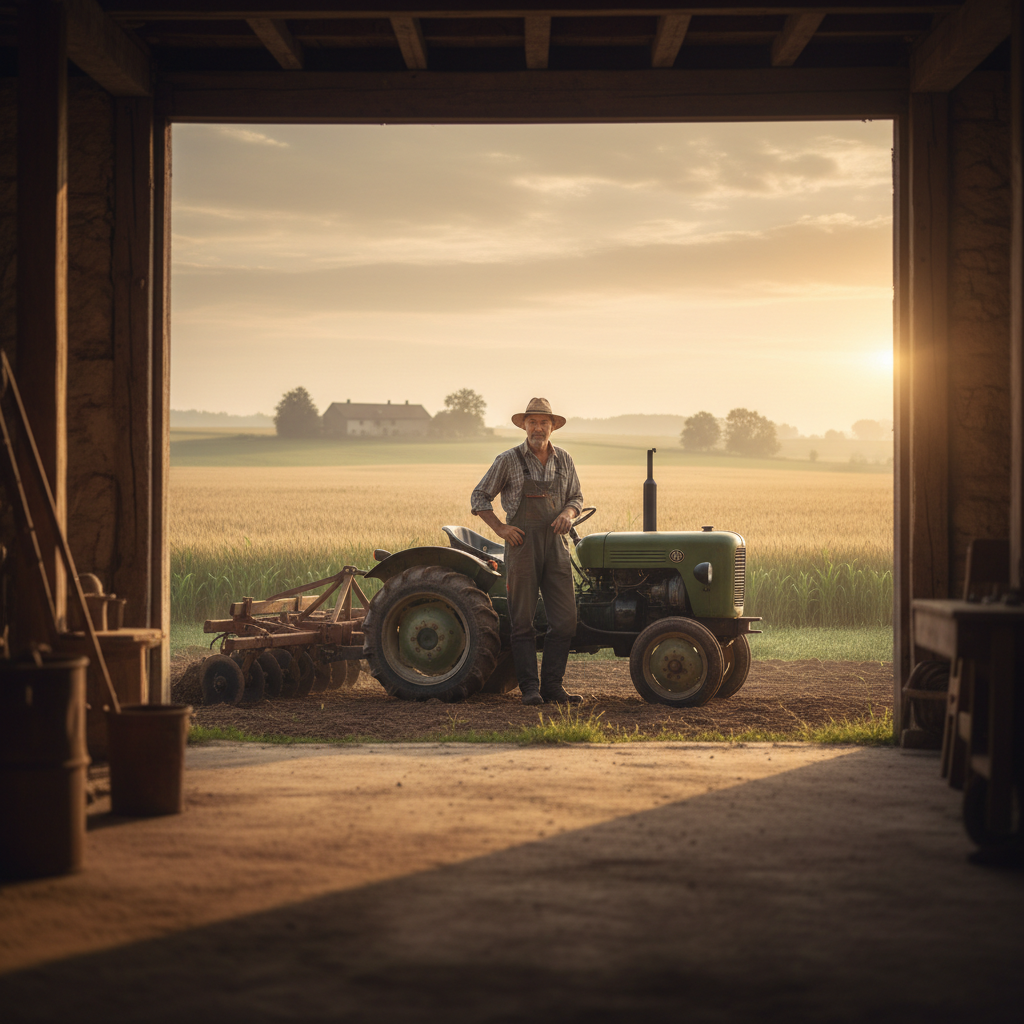
Agriculture presents a distinct hazard profile where the shop is often a wind-blown field, requiring protection that moves with the worker. Statistics indicate that 70 to 80 percent of farmers perform their own metal repairs. This high rate of self-reliance makes professional-grade equipment a practical necessity rather than a luxury. When handling rusty, jagged implement parts or old fencing, farmers require gauntlet-style gloves with high puncture resistance. These gloves must protect the wrists from sharp edges while providing enough dexterity for precise trigger control during a repair.
Footwear is another critical point of failure in agricultural settings. Sturdy, steel-toed leather boots are non-negotiable. These must be rated to resist both high-heat sparks and the corrosive chemicals often found in fertilizers and pesticides. In the Scottsdale climate, cheap leather will quickly crack and delaminate under intense UV exposure and chemical contact. Sourcing your industrial safety gear through a direct-supply model allows small-scale operations to access the professional industrial tools and welding grinding cutting PPE safety gear contractors farmers 2026 standards require without the middleman markup. If you are outfitting a family farm or a specialized agricultural crew, you can contact Harrison Hunter Industrial Supply to secure gear that survives the field.
Agricultural PPE Feature | Function in the Field |
|---|---|
Puncture-Resistant Gauntlets | Protects against rusty metal and sharp implement edges |
Chemical-Resistant Leather | Prevents boot degradation from fertilizers and manure |
Steel-Toed Reinforcement | Guards against heavy equipment shifts and falling parts |
A 2026 Checklist: Essential Safety Gear for Every Metalworking Rig
Standardizing your rig ensures that every job, from shop fabrication to emergency field repairs, meets modern safety benchmarks. A complete metalworking kit must prioritize high-impact durability and respiratory health without gaps in coverage. Sourcing the welding grinding cutting PPE safety gear contractors farmers 2026 demands from a single source ensures all components integrate properly; for example, verifying that a specific P100 respirator fits comfortably beneath the shell of your auto-darkening helmet.
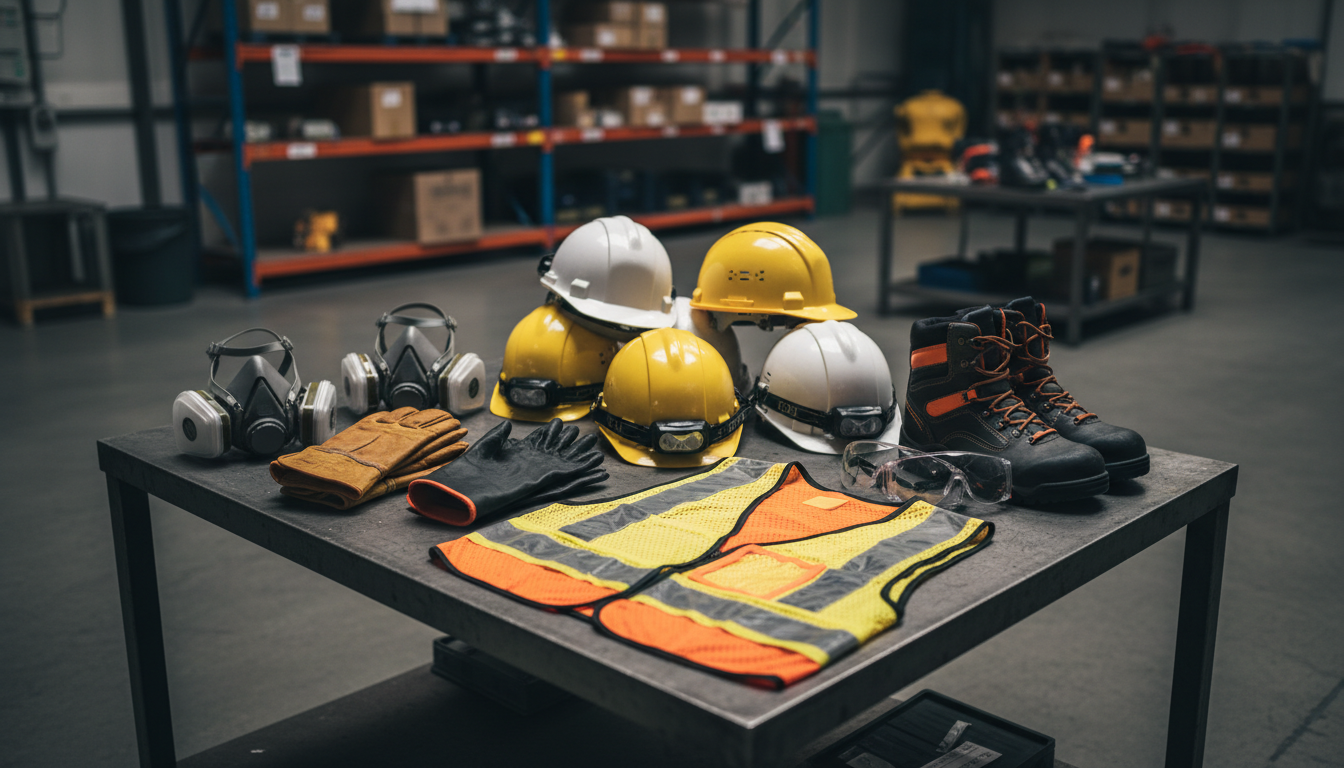
The following ten items represent the mandatory baseline for a professional setup: 1. Auto-darkening helmet (1/1/1/1 optical clarity rating) 2. Z87+ rated safety glasses with side shields 3. High-impact polycarbonate face shield 4. P100 half-mask or PAPR respirator system 5. Kevlar-stitched, heat-resistant leather gloves 6. Flame-resistant (FR) jacket or leather-hybrid coat 7. Disposable earplugs or muffs (25dB+ NRR) 8. Steel-toed, chemical-resistant leather boots 9. Flame-resistant cotton welding cap 10. 10lb ABC dry chemical fire extinguisher
Purchasing these professional industrial tools through Harrison Hunter Industrial Supply eliminates the middleman markup often found in big-box retail outlets. This direct-supply model allows teams to standardize their industrial safety gear while maintaining a lower overhead. If you are building a new rig from scratch or outfitting a mobile crew, contact Harrison Hunter Industrial Supply to ensure your components are fully compatible and compliant with 2026 safety standards.
OSHA Compliance for Small Teams: Avoiding Costly 2026 Fines
Small teams and agricultural operations must align their shops with OSHA 1910.252 and 1910.133 standards to avoid escalating penalties. 1910.252 outlines general requirements for welding, cutting, and brazing, while 1910.133 mandates specific eye and face protection. In 2026, inspectors are specifically targeting respiratory health and vision safety in both construction and agriculture. A proactive self-audit ensures your welding grinding cutting PPE safety gear contractors farmers 2026 kit remains compliant.
Item to Audit | Retirement Criteria | Failure Risk |
|---|---|---|
Polycarbonate Lenses | Pitting, deep scratches, or cracks | Reduced impact resistance; shattering |
Welding Gloves | Frayed stitching, holes, or stiff "cooked" leather | Thermal burns and electrical conductivity |
Respirators | Cracked silicone, lost elasticity in straps | Seal failure and inhalation of metal fumes |
FR Clothing | Holes larger than a dime or oil saturation | Flash fire risk and loss of FR properties |
Regularly inspect your industrial safety gear to identify these failure points. Sourcing professional industrial tools through a direct model makes it cost effective to replace worn equipment before an injury or a fine occurs. For guidance on selecting replacement components that meet 2026 standards, contact Harrison Hunter Industrial Supply.
Protecting yourself while welding or grinding involves more than just wearing old gloves. By choosing high-quality PPE designed for the demands of 2026, contractors and farmers can significantly reduce their risk of injury. While selecting the right gear is a great start, staying current with shifting safety standards can be a complex task. If you want expert help finding the perfect supplies for your specific operation, you can learn more about us and how our team supports local industrial needs. We are here to ensure your shop stays safe and efficient.