
Selecting the right saw blade requires matching tooth geometry and material composition to the specific task, such as using carbide-tipped teeth for tough metals or diamond edges for masonry. This saw blade selection guide contractors farmers metal wood concrete 2026 highlights that bimetal blades offer the best versatility for general use, while high-tooth counts are necessary for clean, precise cuts. By choosing the correct width and material grade, professionals can maximize tool life and achieve faster, more efficient results across various job sites.
Choosing the wrong saw blade does more than just slow down your project; it actively erodes your profit margins through wasted material and premature tool failure. Whether you are a contractor framing a commercial site or a farmer repairing heavy equipment in the Arizona sun, the cost of an inefficient cut adds up quickly. In 2026, the gap between standard retail blades and industrial-grade solutions has widened, making technical knowledge a competitive necessity. This guide provides an expert breakdown of how to match specific blade technologies to your toughest materials. You will learn the financial logic behind carbide-tipped upgrades, the critical 3-tooth rule for optimizing TPI, and how to select diamond bonds for various concrete densities. We also explore specialized strategies for bandsaws and reciprocating saws to ensure your shop remains productive and your overhead stays low.
Why Blade Selection Dictates Profitability for Arizona Contractors and Farmers
In the high-stakes environment of 2026 construction and agriculture, choosing the wrong blade is more than a minor inconvenience; it is a direct hit to your bottom line. A mismatched blade leads to slower feed rates, excessive vibration, and ruined materials that must be scrapped at current market prices. For Arizona contractors and farmers, the stakes are even higher due to the desert climate. Heat management is the primary enemy of blade longevity. Without proper thermal dissipation and correct tooth geometry, even a premium blade can dull in minutes, leading to wasted labor hours as crews wait for replacements or struggle with inefficient equipment.
Harrison Hunter Industrial Supply serves as a direct link to professional-grade equipment, functioning as a specialized industrial tool supply that bypasses traditional retail markups. By eliminating the middleman, we provide access to high-performance consumables at distributor pricing. This allows you to shift your focus from "cost per blade" to "cost per cut." A cheap blade that requires frequent changes and slows down production is almost always more expensive than a premium option that stays sharp through hundreds of cycles. Success requires a strategic approach to this saw blade selection guide contractors farmers metal wood concrete 2026 needs to ensure every tool in the shop remains an asset rather than a liability. If you are looking to refine your shop’s efficiency beyond just consumables, review our industrial tool maintenance guide or contact our team to optimize your inventory.
Metal Cutting Mastery: Choosing Between Bi-Metal and Carbide-Tipped Blades
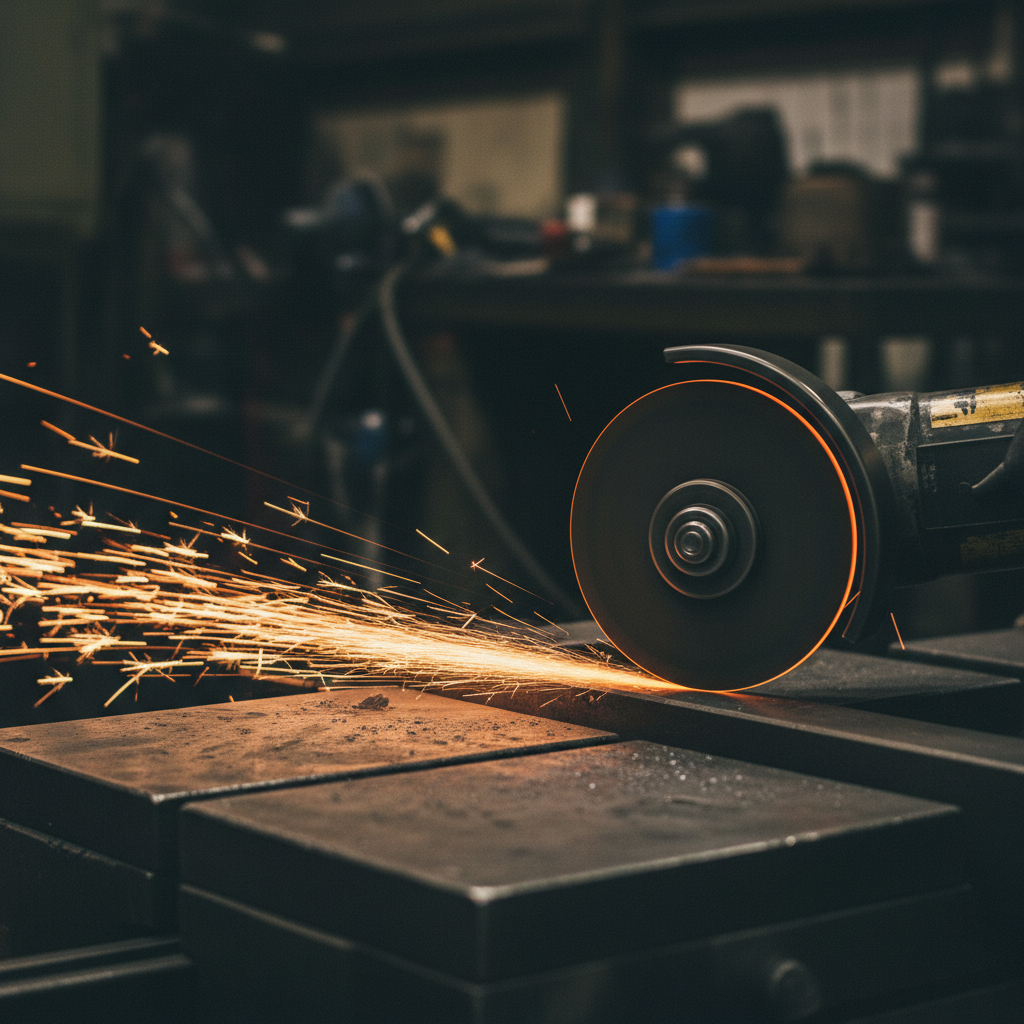
Choosing the right cutting edge starts with understanding the metallurgy behind the teeth. For most day-to-day tasks on an Arizona job site or in a farm repair bay, the choice narrows down to bi-metal or carbide-tipped. Bi-metal blades are constructed by electron beam welding high-speed steel (HSS), typically M42 or M51 grades, to a flexible alloy steel backing. This dual-material design provides the necessary flexibility to handle shock and vibration without snapping, making bi-metal the undisputed workhorse for mild steel, structural tubing, and general farm repairs. If you are cutting common carbon steel or iron, bi-metal is the primary recommendation in any saw blade selection guide contractors farmers metal wood concrete 2026 experts rely on.
Carbide-tipped blades feature tungsten carbide teeth brazed to the blade body. While carbide is more brittle than HSS, it is significantly harder and maintains its edge at much higher temperatures. This makes carbide essential for challenging alloys, hardened tool steels, and high-volume stainless steel fabrication. In the high-production demolition environments of 2026, where labor costs demand maximum uptime, the superior heat resistance of carbide allows for aggressive feed rates that would dull a standard bi-metal edge in minutes.
Feature | Bi-Metal (M42/M51 HSS) | Carbide-Tipped |
|---|---|---|
Primary Application | Mild steel, angle iron, general repair | Stainless steel, cast iron, hardened alloys |
Key Benefit | High shock resistance and flexibility | Extreme hardness and thermal stability |
Best Environment | Manual feed, portable saws, general stock | High-production shops, CNC sawing, demolition |
Selecting the correct blade material is the first step toward reducing waste. If your crew is struggling with premature dulling on tough materials, it may be time to contact our team to discuss moving from bi-metal to a specialized carbide solution.
The Cost Per Cut Formula: When Does Carbide Make Financial Sense?
Transitioning from material types to financial logic requires looking past the initial invoice. A $150 blade that lasts 50 times longer than an $8 high-speed steel (HSS) alternative is a net win for any operation. This cost per cut mindset accounts for more than just the price of the steel; it factors in the massive labor savings of avoiding constant blade changes. On a busy Arizona job site, the time spent stopping work to swap out dull blades is time that is not being billed.
Metric | Standard Bi-Metal (HSS) | Premium Carbide-Tipped |
|---|---|---|
Initial Investment | Low | High |
Lifespan Ratio | 1x | 20x to 50x |
Labor Impact | Frequent downtime | Maximum uptime |
Best Use Case | General farm repair, mild stock | High-volume production, hardened alloys |
Carbide makes financial sense when cutting stainless steel or handling high-production demolition where speed is critical. Conversely, a farmer performing a one-off equipment repair on mild steel may find a standard bi-metal blade more appropriate for their needs. This saw blade selection guide contractors farmers metal wood concrete 2026 helps prevent overspending on specialized tools for simple tasks while ensuring high-volume users do not starve their profit margins with cheap consumables. If you need help calculating the ROI on your specific material needs, contact our team for a detailed assessment.
Understanding TPI and the 3-Tooth Rule for Faster Cuts
Efficient cutting relies heavily on understanding Teeth Per Inch (TPI). This measurement determines both the speed of the cut and the finish quality. As a core component of any saw blade selection guide contractors farmers metal wood concrete 2026 professionals utilize, mastering TPI starts with the 3-Tooth Rule. This rule dictates that at least three teeth must be in contact with the workpiece at all times. If the TPI is too low for the material thickness, the teeth will straddle the edge and snag, leading to stripped teeth and a ruined blade.
Conversely, too many teeth in contact with soft or thick material will cause the gullets to clog with chips, generating excessive heat and stalling the cut. The following guide provides a standard baseline for TPI selection across common materials:
Material Type | Recommended TPI | Result |
|---|---|---|
Thick Wood / Soft Materials | 3 - 6 TPI | Fast, aggressive cutting with high chip clearance |
General Purpose / Medium Metal | 6 - 14 TPI | Balanced speed and finish for structural steel |
Thin-Walled Tubing / Sheet Metal | 18 - 24 TPI | Smooth cuts without snagging or deformation |
In 2026, industrial safety standards place a high premium on noise and vibration reduction. Variable pitch blades address this by varying the tooth size and gullet depth along the blade, such as an 8/12 or 10/14 configuration. This variation breaks up the harmonic vibrations that cause high-pitched screeching during metal cuts. By reducing chatter, these blades provide a cleaner finish and significantly reduce operator fatigue. Sourcing these specialized blades through a direct industrial tool supply ensures you receive the latest tooth geometries designed for modern job site demands. Properly matched TPI is the simplest way to protect your equipment while maintaining high production speeds.
Concrete and Masonry: Matching Diamond Blade Bond to Material Hardness
Transitioning from metal to masonry requires a shift in how you evaluate cutting performance. In concrete applications, diamond blades do not actually cut; they grind. This makes bond hardness the most critical factor in your selection process. A comprehensive saw blade selection guide contractors farmers metal wood concrete 2026 follows a five step framework: identifying the specific material, matching the saw's horsepower, confirming RPM requirements, choosing between wet or dry cutting, and determining the necessary cutting depth.
The logic of diamond bonds is often counter-intuitive for those used to wood or metal blades. You must match a soft bond blade with hard materials and a hard bond blade with soft materials to ensure the blade self-sharpens correctly.
Material Hardness | Required Bond Type | Mechanical Action |
|---|---|---|
Hard (Cured Concrete, Stone, Tile) | Soft Bond | Matrix wears quickly to expose new diamond grit |
Soft / Abrasive (Asphalt, Green Concrete) | Hard Bond | Matrix resists abrasion to keep diamonds in place longer |
If you use a soft bond on abrasive asphalt, the metal matrix will strip away prematurely, wasting expensive diamonds. Conversely, using a hard bond on reinforced concrete causes the blade to glaze over or glimmer because the matrix won't wear down to reveal fresh cutting edges. Machine compatibility is equally vital; always verify that your saw’s RPM and horsepower align with the blade’s specifications to prevent overheating. On Arizona job sites, wet cutting is the mandatory standard for both cooling and dust control. It ensures compliance with silica dust regulations while extending the life of your investment in the desert heat. If you are seeing inconsistent performance from your masonry equipment, contact our team to help calibrate your blade selection to your specific local aggregate. For more on keeping your equipment in top shape, refer to our industrial tool maintenance guide.
Bandsaw Blade Selection for the Farm Shop and Repair Bay

While diamond blades handle the site's masonry requirements, the farm shop demands a different level of versatility. A typical day in a repair bay might begin with slicing a heavy steel gate post and end with trimming wooden spacers. This multi-material environment requires a saw blade selection guide contractors farmers metal wood concrete 2026 professionals trust to balance durability with precision.
Blade width is your primary consideration for cut geometry. A wide blade, typically 3/4 inch or 1 inch, provides the beam strength required for straight resawing and heavy structural steel. Narrower blades, such as 1/4 inch or 3/8 inch, are essential for following tight radii or custom curves on specialized repair brackets.
Application | Width Preference | TPI Range | Tooth Design |
|---|---|---|---|
Heavy Steel Stock | Wide | 6 - 10 TPI | Regular / Hook |
Thin Wall Tubing | Wide | 14 - 24 TPI | Constant Pitch |
Aluminum & Gummy Wood | Variable | 3 - 6 TPI | Skip-Tooth |
Curved Metal Parts | Narrow | 10 - 14 TPI | Bi-Metal |
For gummy materials like aluminum or soft woods, skip-tooth designs are superior because they provide extra gullet space to clear chips. This prevents the material from welding to the blade and causing premature dulling. Sourcing these specialized blades through a direct industrial tool supply ensures you have the right metallurgy for the 2026 agricultural landscape. If you are unsure which TPI matches your most frequent repair tasks, contact our team to optimize your shop inventory.
Reciprocating Saw Strategy: Beyond the Standard Demo Blade
While bandsaws anchor the shop, the reciprocating saw, frequently searched as a "Sawzall" for on-site demolition, is the primary tool for field modifications and rough-ins. Efficiency with these tools starts with correct sizing. A reliable rule of thumb is selecting a blade at least two inches longer than the material thickness. This extra length accounts for the tool's stroke length; it ensures teeth clear the cut and eject debris effectively rather than bottoming out or vibrating excessively against the workpiece.
Selecting the right tooth geometry is equally critical. Blades designed for wood with nails feature reinforced shoulders to survive impacts with fasteners, whereas dedicated thick-metal blades use a taller blade profile and higher TPI to maintain straight cuts in structural steel. In the 2026 Arizona construction landscape, heat management is the greatest challenge. Advanced "nitroc" coatings and specialized thermal-resistant finishes now provide a necessary barrier against the high-friction environments typical of desert job sites. These coatings prevent the blade from softening or "blueing" during aggressive use. Sourcing these high-performance consumables through an industrial tool supply ensures you have access to the latest metallurgical coatings that outperform standard retail options. If your crews are burning through demolition blades prematurely, contact our team to evaluate your specific application and optimize your tool kit.
Protecting Your Investment: Maintenance and Heat Management in 2026

Every strategy mentioned in this saw blade selection guide contractors farmers metal wood concrete 2026 depends entirely on how you treat the edge once it meets the material. Excessive heat and incorrect feed pressure are the primary causes of premature blade failure. Pushing a blade too hard leads to tooth deflection or stripping; however, insufficient pressure causes the teeth to rub rather than cut, creating localized friction that ruins the blade's temper.
Properly breaking in a new bandsaw blade is the most overlooked step in shop maintenance. You should run a new blade at full speed but only half the normal feed pressure for the first few cuts. This process hones the razor-sharp tooth tips into a more durable, slightly rounded edge that resists chipping during high-production runs. Sourcing your consumables directly from an industrial tool supply ensures you avoid stale inventory found in retail stores, where blades may suffer from compromised welds or atmospheric rust. For a deeper look at protecting your equipment, refer to our industrial tool maintenance guide. If you are experiencing inconsistent blade life, contact our team to calibrate your equipment settings for the Arizona heat.
Choosing the right saw blade is about more than just making a cut; it is about maximizing your efficiency and protecting your equipment for the long term. While matching the blade to the material is a great start, specific project requirements often benefit from a more tailored approach. If you want expert help finding the ideal supplies for your next job, our team is ready to support you. You can learn more about our history and our dedication to industrial excellence to see how we help professionals succeed.